.png)
The Psychology of Mess: Why We Let Stuff Pile Up
- Michelle D

- Dec 5
- 2 min read
Updated: 3 days ago
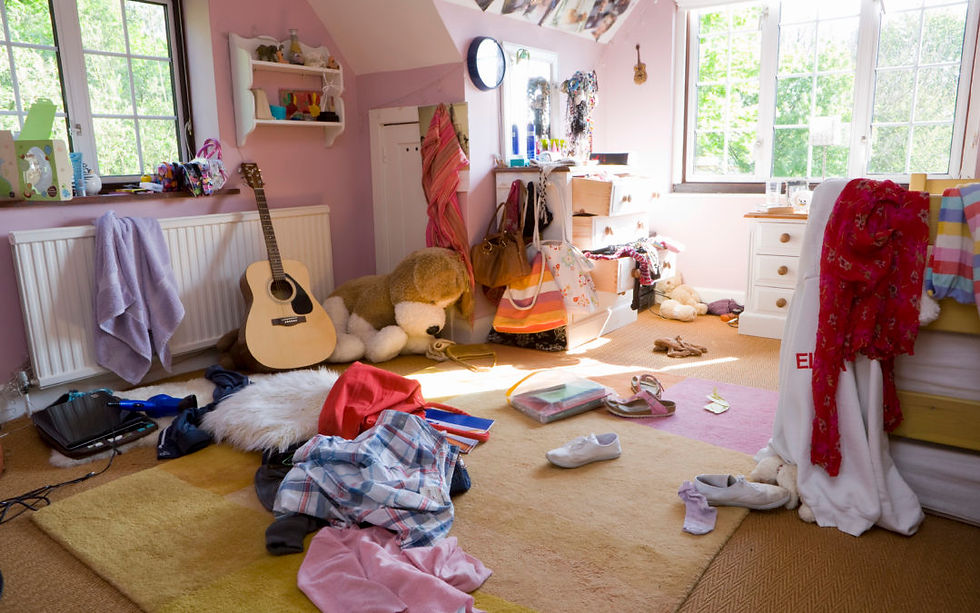
There’s a secret world happening behind that stack of unopened mail, those random chargers, and the corner chair now functioning as a textile mountain. You’re not lazy. You’re basically a glitching computer running eight browser tabs too many.
Decision Fatigue:
The Brain Literally Gets Tired of Choosing
Every object in your house demands a question. Where does this go? Will I need it later? Is it trash? Should I donate it? Will I regret it?
The brain can only handle so many decisions before it taps out and says “let’s just throw this on a pile and deal with it tomorrow,” except tomorrow becomes 87 days from now and you’re Googling storage units like that's a personality trait.
Tip: Create pre-made decisions like a donation basket, a “papers to sort weekly” folder, or one drawer for tech wires. If the decision is automatic, you don’t burn brain fuel every time.

Clutter Blindness:
You Stop Seeing Stuff That's Right in Front of You
It’s like the cognitive version of nose blindness. Eventually, your brain decides piles are “normal background information. That vase on the counter? Been there for six months. The random Amazon return you forgot about? Your brain says, “that box is part of the architecture now.”
Tip: Walk into your space like a guest. Literally leave and come back through the front door. Your brain will suddenly go, hold up, who lives like this?

Doom Boxes:
The Graveyard of Random Objects
Doom boxes are those containers we chuck stuff into when we don’t want to deal with it in real time. They’re the Bermuda triangles of our homes. Pens, receipts, single earrings, an expired dog vaccine postcard, that random tiny screwdriver you might need someday. They exist so we can procrastinate with confidence.
Tip: Make one official doom box, not ten. Then schedule one day a month to dump it out while listening to a playlist that turns you into a vaguely productive main character.
The Dopamine :
Hit of a Reset Space
Humans crave a sense of completion. That bathroom counter wiped down? Instant reward. Kitchen sink empty? Feels like emotional skincare.
Cleaning is one of the rare tasks in adulthood where you see a transformation quickly, and your brain eats that up like candy. Why do you think cleaning videos on TikTok are basically soap operas for the tired soul?
Tip: Do micro-resets. One surface. One drawer. One ten-minute sprint. The dopamine hits stack like interest.

Real Talk
Mess isn’t a moral failure. It’s a coping mechanism, a side effect of being overworked and under stimulated, of trying to live life while being ambushed by mail, laundry, and Target impulse buys. The trick isn’t perfection, it’s designing systems that assume you will be human.

Comments