

The Best Flooring For a Cleaner, Lower-Maintenance Home

Updated: Aug 18
The Best Flooring for a Cleaner, Lower-Maintenance Home
A Professional Cleaner’s Take on Kitchens, Basements & High-Traffic Floors

When homeowners choose new flooring, the conversation usually revolves around three things: how it looks, how much it costs, and how long it will last.
There’s another question worth asking:
How annoying is this floor going to be to keep clean?
As professional house cleaners, we see flooring differently. We see what happens after the installers leave and real life moves in—muddy shoes, pets, cooking grease, spills,
Portland rain, dust, crumbs, and everything else a busy household throws at a floor.
Let’s be completely realistic ontop of those things… Some floors are truly beautiful but they are an absolute pain to maintain.
If you’re replacing old carpet, remodeling a kitchen, dealing with a damp basement, or simply want flooring that doesn’t require constant attention, here’s what we recommend considering before you buy.

For those Homeowners who have had Leaky Basements…
First: If You Have a Basement Leak, Fix the Moisture Problem Before the Floor
This one matters.
If water intrusion caused you to tear out basement carpet, don’t rush into installing another flooring material until you know where the moisture came from and the underlying area has been properly dried and evaluated.
Putting beautiful new flooring over an unresolved moisture problem can turn an expensive renovation into an even more expensive do-over.
Basements are also one place where we generally wouldn’t choose wall-to-wall carpet if moisture is a recurring concern.
Carpet can hold moisture, odors, dirt, pet hair, and allergens deep below the surface. When water gets underneath it, cleaning the visible surface doesn’t necessarily solve what’s happening below.

Luxury Vinyl Plank: One of the Most Practical Choices
Luxury vinyl plank—usually called LVP—has become popular for a reason.
Modern versions can give you a surprisingly realistic wood appearance without many of the maintenance concerns associated with actual hardwood.
From a cleaning perspective, we like it because it’s generally:
Easy to vacuum and mop
Resistant to everyday spills
Available in highly water-resistant or waterproof options
Less likely to trap odors than carpet
Available in tons of colors and wood-look finishes
Practical for households with kids and pets
It’s an especially interesting option for kitchens and high-traffic areas.
For basements, however, don’t assume that a product marketed as “waterproof” makes the entire flooring system immune to water problems. The flooring itself may tolerate water while moisture underneath it can still create problems.
The product, subfloor, installation method, and moisture conditions all matter.

Tile: The Cleaning Workhorse
There is a reason tile survives bathrooms, entryways, kitchens, and other messy spaces.
It’s durable, moisture-resistant when properly installed, and relatively straightforward to clean.
The downside?
Grout.
Anyone who has ever scrubbed years of buildup out of grout knows exactly what we’re talking about.
If easy maintenance is a priority, consider larger-format tiles and narrower grout lines.
Fewer grout lines mean fewer little channels collecting dirt.
And choose your grout color strategically.
Brilliant white grout can look incredible when it’s new—but it also has a special talent for documenting every dirty thing that’s ever happened in your kitchen.

Hardwood: Gorgeous, But It Wants to Be Treated Accordingly
We love the appearance of hardwood.
From a cleaning standpoint, though, hardwood requires more consideration than many homeowners realize.
Standing water is the enemy. Harsh cleaners are a bad idea. Scratches can become an issue, especially with pets, furniture, and gritty debris tracked inside.
That doesn’t mean you shouldn’t choose hardwood.
It means you should choose it because you genuinely want hardwood—not because you think it will be the easiest floor in the house to maintain.
If your primary goals are affordability, moisture resistance, and easy cleaning, one of today’s quality wood-look alternatives may make more sense.

Laminate Has Improved—A Lot
If the word “laminate” immediately makes you picture shiny fake wood from decades ago, it’s worth taking another look.
Modern laminate can be remarkably convincing.
It can also offer excellent scratch and wear resistance, which makes it attractive for busy households.
Where we’d pay close attention is water resistance.
Products vary significantly. A kitchen or basement isn’t the place to buy flooring based solely on appearance or price. Read the manufacturer’s water-resistance specifications and warranty before making the decision.

What About Marmoleum?
Marmoleum and other linoleum products have some legitimate advantages. They’re durable, available in interesting designs, and can last for years when properly maintained.
But after living with the same floor for 15 or 20 years, plenty of homeowners are simply ready for something different.
If you’re craving the warmth of wood without committing to hardwood, modern LVP or laminate can dramatically change the look of a kitchen while remaining relatively easy to maintain.
Don’t Forget About Texture
Here’s something people don’t think about enough when shopping for flooring:
Texture affects cleaning.
Deep grooves, heavy embossing, uneven surfaces, and highly textured finishes can collect dirt.
That gorgeous sample you’re holding under showroom lighting isn’t being asked to deal with six months of kitchen grease, dog hair, crumbs, and wet shoes.
Before purchasing, run your fingers across the surface.
Look closely at the grooves.
Then imagine trying to get dried spaghetti sauce out of them.
Suddenly, flooring shopping gets a little more practical.

Extremely Dark Floors Can Be Surprisingly High Maintenance
Dark floors can look dramatic and expensive.
They can also show:
Dust.
Hair.
Lint.
Crumbs.
Footprints.
Everything.
Very light solid-colored floors can have similar problems with darker debris.
If you’re looking for a forgiving floor, consider mid-tone colors with natural variation rather than one perfectly uniform color.
Wood-look patterns are particularly good at disguising the little bits of everyday debris that appear approximately five minutes after you’ve finished cleaning.
Our Cleaner-Friendly Flooring Checklist
Before committing to a floor, ask:
Is it appropriate for the moisture level in this room?
What happens if water sits on it?
Does the manufacturer’s warranty cover water exposure?
Does the surface have deep grooves that will trap dirt?
Will the color show every piece of hair and dust?
Is it safe to vacuum normally?
What cleaning products does the manufacturer recommend?
Are there products that can damage or discolor it?
How difficult will it be to remove grease from it in a kitchen?
How will it handle pets, shoes, furniture, and daily traffic?
If one section becomes damaged, can individual pieces be replaced?
What maintenance will this floor realistically need five years from now?
The Floor You Can Actually Live With Usually Wins
There’s no single “best” flooring for every house.
A gorgeous hardwood floor may be completely worth the maintenance to one homeowner. Another household with three dogs, kids, and a wet Portland winter may be much happier with durable luxury vinyl.
That’s why we recommend thinking beyond the showroom.
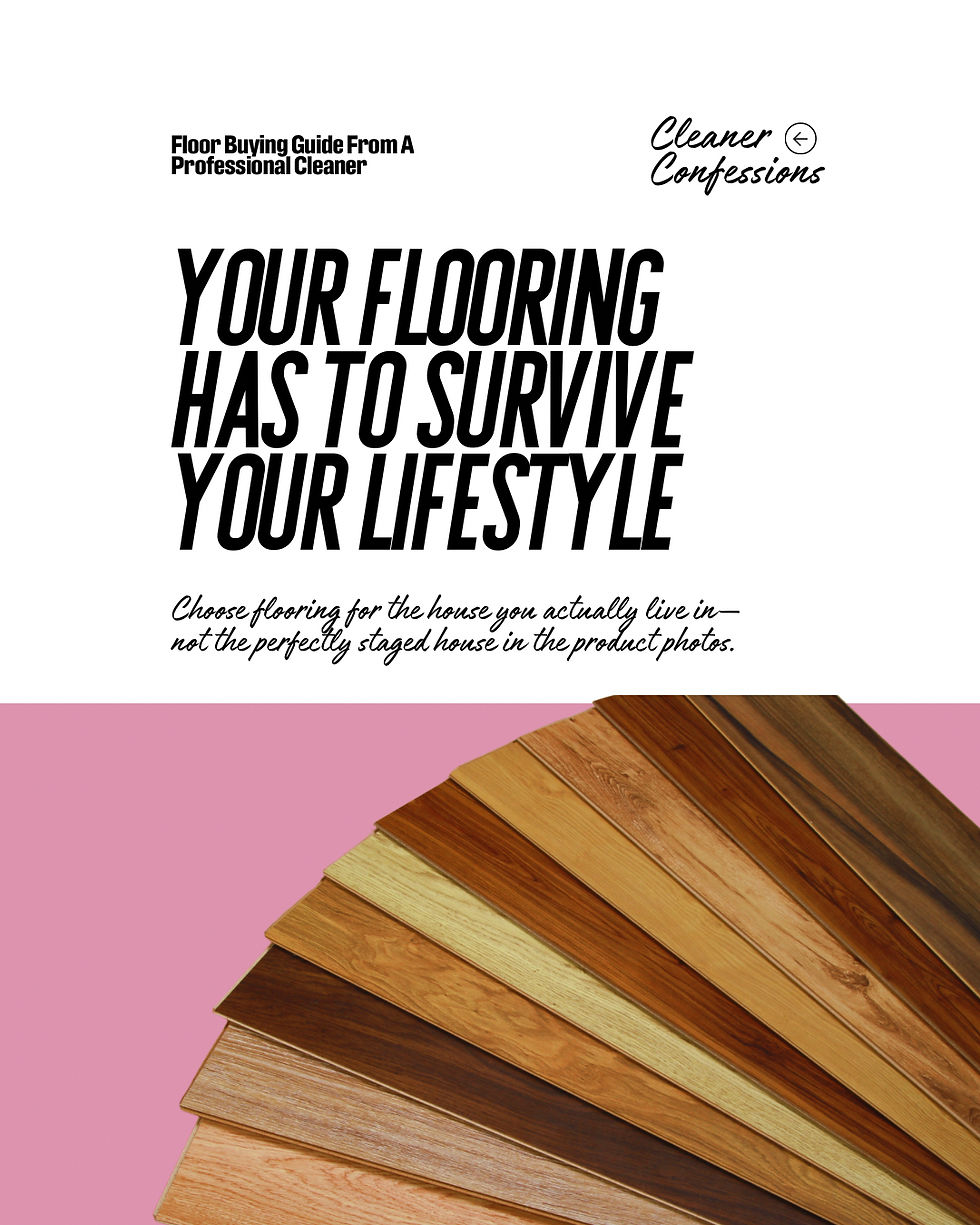
Choose flooring for the house you actually live in—not the perfectly staged house in the product photos.
Your flooring has to survive your lifestyle and your cleaning routine.
And if you’re already staring at your current floors thinking, Well, mine are way past the point of a Swiffer, that’s where we come in.
Scrub PDX provides professional residential cleaning in Portland, Oregon, including the detail work that floors, baseboards, kitchens, and high-traffic areas eventually need.
Because choosing an easier-to-clean floor is smart.
Having someone else clean it is even better.
Comments